


How to Bring CPR Training and AED Awareness to Your Community
How to Bring CPR Training and AED Awareness to Your Community
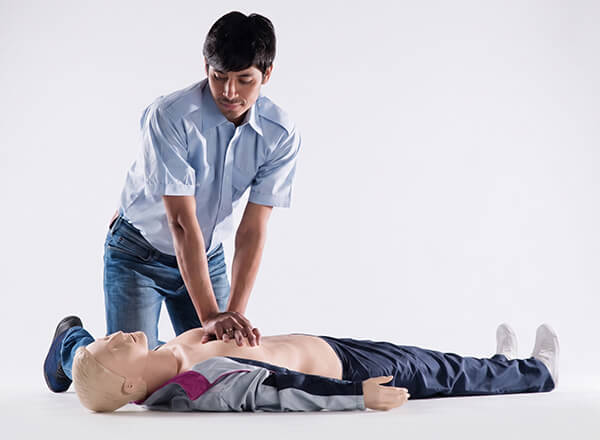
More than 356,000 people suffer from out-of-hospital cardiac arrests (OHCA) each year. As many as 70% to 90% of OHCA patients do not survive long enough to reach a hospital.
The odds of a physician or nurse being on hand during an emergency are minimal, so lay rescuers can play a critical role in out-of-hospital cardiac arrests. Lay rescuer CPR, sometimes called bystander CPR, can double or triple the survival rate.
With CPR training and AED awareness programs, hospitals can bridge the gap between health care professionals and community CPR needs.
AED Awareness Takes Center Stage at a Middle School Dance
Cardiac incidents can happen anywhere, even in middle school. Approximately 23,000 children suffer sudden cardiac arrest in the United States each year.
When Patricia Hendershot, MSN, RN, chaperoned her daughter's first middle school dance, she only wanted to volunteer. Instead, she used her AED training to save a child's life. When a student passed out and her pulse became thready, Hendershot quickly realized it was serious. She used the school's AED and continued CPR until the fire department arrived.
"I knew right away that something was very wrong, so I asked the principal to retrieve their AED for me immediately," says Hendershot.
Hendershot presented her story to Ohio legislators to advocate for House Bill 47, which requires AED and emergency action plans for all Ohio schools. Her experience demonstrated how these devices make a difference in a cardiac event. Hendershot's advocacy contributed to Governor Richard (Mike) DeWine's decision to sign House Bill 47 into law in July 2024.
Many states have enacted laws like the one in Ohio, but schools are only one of the places where lay rescuer CPR is saving lives. Similar cases have been reported at sporting events and public gatherings, where RNs put their CPR knowledge to use in medical emergencies outside of the hospital. These events highlight the need for broader CPR education in the community.
Communicating the Importance of CPR Training to the Community
Nadeerah Coles, EdD, MSN, RN, is the director of nursing professional development at Penn Medicine Lancaster General Hospital. She oversees the Life Support program coordinator who serves as an instructor and provides training.
"We really advocated for the importance of learning proper CPR administration, as well as the use of an AED," Coles explained. "A lot of people think you need to be in health care in order to learn CPR, but that's not true."
Coles believes:
- Community members should learn CPR.
- Sudden cardiac events can impact anyone.
- Lay rescuers play a lifesaving role in the community.
- Knowing CPR and AED training can increase survival.
- It's valuable to maintain mandatory certification.
How CPR Training Improves Community Survival Rates
Lay people often don't have the same situational awareness as medical professionals. But that isn't a lack of ability, it's a lack of training. "CPR is an ability people can and should incorporate into everyday life," says Coles.
The American Heart Association® (AHA®) leads the charge in advocating for legislation to mandate CPR training in schools. These efforts help normalize CPR as a basic life skill.
"While it's great that states are mandating CPR training for high school students, we want them to keep their cards active," Coles says. "We want them to be comfortable and have all the tools to initiate and maintain CPR until emergency services arrive."
CPR Training and AED Awareness at Penn Medicine
Two years ago, Coles was tasked with starting a life support program to help employees maintain certification requirements.
"We successfully created the program for Penn Medicine," Coles says, "But I had a vision of expanding services throughout the community here in Lancaster."
Coles gained full support from leadership, including Chief Nursing Officer Timothy Zellers, to offer life support classes to the community. She was able to get the program off the ground quickly by partnering with Chet Zaremski, the life support program manager of the Penn Medicine Simulation Center's Training Center.
"We are aligned under the Penn Medicine Simulation Center," Coles said. "Partnering made sense because they are part of the same health system and Chet is a great resource."
Bringing CPR Training to the Community
The Penn Medicine program has only been active for a year. While they're still in the growing stage, they have:
- Started community outreach.
- Offered hands-only CPR for free to the public.
- Partnered with local schools and districts.
- Affiliated with a local university.
The program delivered impressive outcomes for staff and the community:
- Improved employee experience: "The staff enjoys completing the online self-paced portion and coming in for the skills station," says Coles.
- Positive community feedback: The program measures success through post-event evaluations.
- Increased involvement: Program participation is growing.
- Cost-neutral simulation: "Our department started a simulation space for our mock OR, and we did it for zero dollars," Coles said.
7 Steps To Create a CPR Training Program for Your Community
For leaders who want to create a CPR and AED awareness training program, Coles offers seven tips to help you get started:
- Research first: Find out about all the current training sites in your area.
- Network: "Once you see what programs are active and available in your area, reach out to possible partners and colleagues," Coles advises.
- Choose program type: Consider free community-focused training, paid offerings for certification maintenance, employee training, or a combination of all three. Learn as much as you can about the model before deciding.
- Source training requirements: Determine what your needs are and how to solve them. For Penn Medicine, the training facility was part of the health center.
- Identify staff: "We had a number of nurses who were very interested in becoming instructors to conduct classes in the community," Coles said.
- Find cost savings: Compare costs of sending employees out to gain certification versus building an internal program. This information can be helpful to gain leadership buy-in.
- Determine compensation: Distinguish training time from full-time employment. Consider flexible hours to help guard instructors against burnout.
Empowering Lay Rescuers Through CPR Training and AED Awareness
CPR and AED training ensure lay rescuers have the skills and confidence to act quickly in emergencies. This instruction enabled Hendershot to respond without hesitation.
"Despite having been away from the bedside and patient care for over 5 years at that time, my training was instrumental in my quick response and intervention," she said.
Penn Medicine's program demonstrates how health systems can expand impact beyond the organization, in a cost-effective way. These efforts support staff engagement and improve community outcomes.
When organizations invest in training, they build stronger, more prepared communities. They help bridge the gap between health care professionals and the general public, increasing everyone's chances of survival.
For more information about how digital resuscitation technology and training can benefit health care organizations, contact RQI Partners.