


9 Ways to Reduce Nursing Burnout in 2026
9 Ways to Reduce Nursing Burnout in 2026

May 6th to May 12th marks National Nurses Week, a time to recognize the contributions of nurses across the profession and acknowledge the challenges they continue to face. As the backbone of the healthcare system, many nurses struggle with overwhelming workloads, emotional exhaustion, and a lack of resources that can harm their well-being and affect patient care.
This is a guide to help you understand nurse burnout, potential causes, its impact on patient care and strategies to help nurse leaders support their teams.
What is Burnout in Nursing?
Burnout is an occupational phenomenon resulting from chronic and unmanaged workplace stress.
It has three main components:
- A sense of energy depletion and exhaustion
- Heightened mental detachment from work or feelings of negativity and cynicism toward one’s job
- Decreased professional effectiveness
Causes of Burnout Among Nurses
While nursing burnout can have different causes, a 2026 survey by The Health Management Academy reveals the following:
- Only 29% of nurses surveyed say their units are adequately staffed
- Nurses strongly agree (4.05/5) that an increasingly exhausted general population compounds their demands
- Only 30% of nurses have access to on-site mental health resources
- Just 12% of nurses have fatigue policies in the workplace
- Nearly 60% of nurses rarely or never feel fully recovered for their next shift
- 58% of nurses surveyed reported severe or complete burnout, with more than half actively considering leaving the profession
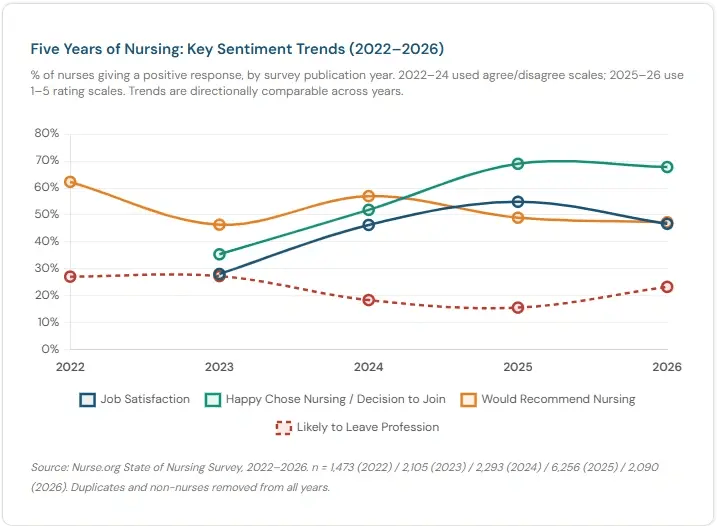
A 2026 survey by nurse.org reports that while 68% of nurses are happy they joined the profession, job satisfaction has decreased.
How Nurse Burnout Affects Patient Care
The impact of nurse burnout goes beyond the individual healthcare professional — it can put patients at risk.
A systematic review of 85 studies found that burnout in nursing was associated with:
- Lower patient safety climate and patient safety grade
- More nosocomial infections
- Patient falls
- Medication errors
- Adverse events
- Lower patient satisfaction ratings
- Lower nurse-assessed quality of care
To compound the issue, nurses experiencing burnout may consider leaving their jobs, leading to staffing shortages.
How to Reduce Nursing Burnout
To reduce nursing burnout, healthcare organizations must address the root causes and prioritize their nursing staff’s well-being.
Here are nine strategies to help healthcare leaders mitigate nurse burnout and support job satisfaction.
1. Address Staffing Shortages
Alleviate staffing shortages by hiring more nurses or implementing strategies such as float pools and cross-training. These measures help to ensure nurses have adequate coverage and support.
2. Streamline Administrative Processes
Identify and streamline tasks to reduce nurses’ administrative burdens so they have more time to focus on patient care.
3. Offer Employee Assistance Programs (EAPs)
Offer EAPs that provide confidential counseling, mental health support and resources for managing stress, anxiety and burnout among nurses.
4. Provide Professional Development Opportunities
Invest in ongoing training, education and skill development programs for nurses to enhance their knowledge, competence and confidence in their roles. For example, the Resuscitation Quality Improvement® (RQI®) program’s low-dose, high-frequency training format helps staff keep their CPR skills sharp year round.
5. Encourage Team Collaboration
Promote a culture of collaboration and teamwork. Encourage nurses to work together, share responsibilities and support each other in delivering high-quality patient care.
6. Create Mentor Programs
Establish programs where experienced nurses can mentor newer or less experienced colleagues. This step can foster community, learning and mentorship within the organization.
7. Regularly Evaluate and Adjust Policies
Continuously assess organizational policies, practices and work environments to identify areas for improvement. Make necessary adjustments to support nurses’ well-being and job satisfaction.
8. Normalize the Discussion
Don’t be afraid to talk about burnout in the workplace. In episode two of the In the Heart of Care podcast, host Ash Panchal, MD, PhD, and Rapid Response Nurse Sarah Lorenzini, MSN, RN, discuss the need to become more aware and comfortable with discussions about burnout. Lorenzini advises listeners, “Find ways to make it normal that we are trying to prevent being burned out. And to recognize that in someone else, and to encourage them to do those behaviors that will support them…”
9. Engage With Supportive Communities Like the RUN
The Resuscitation User Network (RUN) is a digital platform designed for RQI program administrators, Super Users and team leads. This network offers comprehensive tools and resources to help nurses of all levels use their resuscitation programs effectively. Nurses who fit the criteria above can sign up for the RUN using their professional emails to join the thousands of administrators nationwide.
Commit to Preventing Nursing Burnout
While National Nurses Month shines a spotlight on nurses each year, nursing professionals work around the clock every day. Addressing nurse burnout is necessary to ensure quality patient care and sustain a resilient healthcare workforce.
By understanding the causes of burnout, recognizing its impact on patient care and implementing strategies to support nurses, nurse leaders can create environments that foster well-being, job satisfaction and, ultimately, better outcomes for nurses and patients. This Nurses Month, recommit to supporting nursing professionals’ well-being and building a healthier, more sustainable healthcare system.