
Skip Navigation

How Nova Scotia Health Transformed CPR Training with the RQI Program


A Canadian Customer Story of Confidence, Consistency, and Culture Change

When an organization as large and complex as Nova Scotia Health – with more than 24,000 employed across the province – decides to rethink how it trains clinical professionals in lifesaving skills, the stakes are high. Yet for years, the health system struggled with a challenge familiar to many healthcare organizations: inconsistent training, long gaps between recertification, and the inevitable skills decay of hands‑on CPR performance.

When an organization as large and complex as Nova Scotia Health – with more than 24,000 employed across the province – decides to rethink how it trains clinical professionals in lifesaving skills, the stakes are high. Yet for years, the health system struggled with a challenge familiar to many healthcare organizations: inconsistent training, long gaps between recertification, and the inevitable skills decay of hands‑on CPR performance.

In a recent customer story shared through video, several leaders and educators from Nova Scotia Health describe how the Resuscitation Quality Improvement® (RQI®) program reshaped their approach to CPR training. Their reflections reveal not just a shift in process, but a transformation in culture that now empowers staff, improves performance, and ultimately strengthens patient care.

Before the RQI Program: A Patchwork of Training and Long Gaps Between Practice

Shelley Orr, a registered nurse with nearly four decades of experience, recalls the reality before the RQI program was introduced. Resuscitation education was largely dependent on external vendors, and there was no standardized process across the organization. Staff were responsible for seeking out courses on their own time, often off‑site and sometimes years apart.

We really had no standardized process within the organization…” Orr said.

“We really had no standardized process within the organization. We had folks going out, taking courses from external vendors… someone recently told me it had been 10 years since they had taken a course,” Orr said.

This wasn’t unusual. Annual or two-year training meant that even the most dedicated clinicians experienced CPR skills decay, which is a natural decline in muscle memory and confidence when skills aren’t practiced regularly. As Clinical Nurse Educator Zoey Miller explains, “You retain that information for a couple of months, and then it goes to the wayside.”

Introducing the RQI Program: Standardized Resuscitation Education

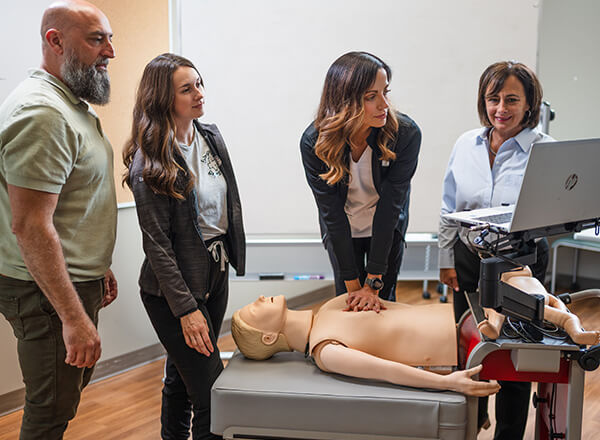
The shift began when Nova Scotia Health implemented the RQI program, a self-directed, low-dose, high-frequency resuscitation education model designed to bring CPR training directly to the clinical environment. Instead of traveling to a classroom or giving up personal time, staff could complete short, focused practice sessions at RQI Simulation Stations located within their own units.

It gives us the ability to have a standardized process… where we’re able to bring the education to the point of care,” Leblanc said.

Derek Leblanc, Manager of Simulation Learning for the Northern Zone, highlights the impact of this new accessibility. With RQI stations available 24/7, staff could “jut out, do five minutes at the skills station, and maintain that competency.” The program’s low dose, high frequency model meant that instead of training once every year or two, clinicians practiced once a quarter or four times a year.

“It gives us the ability to have a standardized process… where we’re able to bring the education to the point of care,” Leblanc said.

The result? Better retention, stronger muscle memory, and a more confident staff.

Real‑Time Feedback: Measurable Skills Improvement

One of the most powerful elements of the RQI program is its real‑time feedback. Instead of waiting for an instructor to evaluate performance, clinicians receive immediate, objective data on compression depth, rate, ventilation adequacy, and more.

Staff now know exactly how they’re performing and can adjust instantly.

“They know what to do in a real code situation because they can reflect on the skills they had from the station,” Miller stated.

The data backs this up. When the program began, infant compression performance was around 46%. After implementing the RQI program, performance increased by an astonishing 121%. This kind of measurable improvement simply wasn’t possible with traditional annual or two-year training.

Overcoming Adoption Challenges and Recognizing a Culture Shift

Implementing a new system across a large health organization is never simple. Leblanc acknowledges that the transition wasn’t without challenges. Some staff were hesitant, especially those who didn’t consider themselves tech‑savvy.

Leblanc acknowledges the early hurdles: “Not going to sugarcoat this. This has been a challenge.”

Some staff were hesitant, especially those less comfortable with technology.

But the platform’s intuitive design helped bridge the gap.

“Even if you weren’t really tech‑savvy, the platform itself is really user‑friendly, so it caught on really quickly,” Leblanc said.

Soon, staff weren’t asking whether they needed to train. They were asking where the Simulation Station was today. This shift reflects something deeper: a culture that embraces continuous learning rather than periodic recertification.

Equity and Consistency Across a Large Organization

Nova Scotia Health employs a workforce of more than 24,000 across the province. Ensuring equitable access to high‑quality resuscitation training for such a large workforce is no small feat. The RQI program didn’t just streamline CPR education. It helped strengthen competence, improved performance, and empowered clinicians across the province.

Clinical Nurse Educator Glenda Howie emphasizes that the RQI program has created a level playing field. Whether a clinician works in a major regional hospital or a smaller facility, they now have access to the same standardized, evidence‑based training.

“They do remember it more so now than they ever have. They’re referring less to the books, and they actually have it in their mind, and they can implement it in practice very fluidly,” Howie said.

That confidence translates directly to patient care. As Howie puts it, “They are ready to perform high‑quality CPR when the population of Nova Scotia needs them most.”

Watch Their Story

Comment Nova Scotia Health a transformé la formation en RCR grâce au programme RQI : une histoire canadienne qui témoigne de la confiance, de la cohérence et du changement culturel

Lorsqu’une organisation aussi grande et complexe que Nova Scotia Health, qui emploie plus de 24 000 personnes dans toute la province, décide de repenser la formation des professionnels de la santé aux techniques de réanimation, les enjeux sont considérables. Pourtant, pendant des années, le système de santé a été confronté à un défi qui est familier à de nombreux organismes de soins de santé : Une formation incohérente, de longs intervalles entre les recertifications et le déclin inévitable des compétences pratiques en matière de RCR.

Dans un récent témoignage client partagé par vidéo, plusieurs dirigeants et formateurs de Nova Scotia Health décrivent comment le programme Resuscitation Quality Improvement® (RQI®) a remodelé leur approche de la formation en RCR. Leurs réflexions révèlent non seulement un changement de processus, mais aussi une transformation culturelle qui responsabilise désormais le personnel, améliore les performances et, en fin de compte, renforce les soins aux patients.

Avant le programme RQI : Une formation disparate et de longs intervalles entre les exercices pratiques

Shelley Orr, infirmière diplômée avec près de quarante ans d’expérience, se souvient de la situation avant la mise en place du programme RQI. La formation en réanimation dépendait en grande partie de prestataires externes et il n’existait aucun processus standardisé au sein de l’établissement. Le personnel était chargé de rechercher des cours pendant leur temps libre, souvent à l’extérieur et parfois à plusieurs années d’intervalle.

«Nous n’avions vraiment aucun processus standardisé au sein de l’organisation. Certains allaient suivre des cours auprès de prestataires externes… quelqu’un m’a récemment dit que cela faisait 10 ans qu’il n’avait pas suivi de cours» explique Mme Orr.

«Nous n’avions vraiment aucun processus standardisé au sein de l’organisation. Certains allaient suivre des cours auprès de prestataires externes… quelqu’un m’a récemment dit que cela faisait 10 ans qu’il n’avait pas suivi de cours» explique Mme Orr.

Ce n’était pas inhabituel. Avec une formation annuelle ou bisannuelle, même les cliniciens les plus dévoués voyaient leurs compétences en RCR se dégrader, ce qui est une baisse naturelle de la mémoire musculaire et de la confiance lorsque les compétences ne sont pas pratiquées régulièrement. Comme l’explique Zoey Miller, infirmière clinicienne formatrice, « vous retenez ces informations pendant quelques mois, puis elles tombent dans l’oubli ».

Présentation du programme RQI : Formation standardisée à la réanimation

Le changement a commencé lorsque Nova Scotia Health a mis en œuvre le programme RQI, un modèle de formation à la réanimation autodirigé, à faible dose et à haute fréquence, conçu pour apporter la formation en RCP directement dans l’environnement clinique. Au lieu de se rendre dans une salle de classe ou de sacrifier leur temps libre, les membres du personnel pouvaient suivre de courtes sessions pratiques ciblées dans les stations de simulation RQI situées au sein de leurs propres unités.

«Cela nous permet d’avoir un processus standardisé… où nous pouvons apporter la formation au point de service» explique M. Leblanc.

Derek Leblanc, responsable de l’apprentissage par simulation pour la zone nord, souligne l’impact de cette nouvelle accessibilité. Grâce aux stations RQI disponibles 24 heures sur 24 et 7 jours sur 7, le personnel pouvait « se pointer, passer cinq minutes à la station de compétences et maintenir cette compétence ». Grâce au modèle à faible dose et à haute fréquence du programme, les cliniciens s’entraînent une fois par trimestre ou quatre fois par an, au lieu d’une fois par an ou tous les deux ans.

«Cela nous permet d’avoir un processus standardisé… où nous pouvons apporter la formation au point de service» explique M. Leblanc.

Le résultat ? Une meilleure rétention, une mémoire musculaire plus forte et un personnel plus confiant.

Rétroaction en temps réel : Amélioration quantifiable des compétences

L’un des éléments les plus puissants du programme RQI est sa rétroaction en temps réel. Au lieu d’attendre qu’un instructeur évalue leurs performances, les cliniciens reçoivent immédiatement des données objectives sur la profondeur et la fréquence des compressions, l’adéquation de la ventilation, etc.

Le personnel sait désormais exactement comment il se comporte et peut s’adapter instantanément.

« Ils savent quoi faire dans une situation d’urgence réelle, car ils peuvent réfléchir aux compétences acquises lors de la formation », explique M. Miller.

Les données le confirment. Au début du programme, les performances en matière de compression chez les nourrissons étaient d’environ 46 %. Après la mise en œuvre du programme RQI, les performances ont augmenté de 121 %, ce qui est tout simplement incroyable. Ce type d’amélioration mesurable n’était tout simplement pas possible avec les formations traditionnelles annuelles ou bisannuelles.

Surmonter les défis liés à l’adoption et reconnaître un changement de culture

La mise en œuvre d’un nouveau système dans une grande organisation de santé n’est jamais simple. M. Leblanc reconnaît que la transition n’a pas été sans difficultés. Certains membres du personnel étaient réticents, en particulier ceux qui ne se considéraient pas comme des experts en technologie.

M. Leblanc reconnaît les obstacles initiaux : « Je ne vais pas vous mentir. Cela a été un défi. »

Certains membres du personnel étaient réticents, en particulier ceux qui étaient moins à l’aise avec la technologie.

Mais la conception intuitive de la plateforme a contribué à combler le fossé.

« Même si vous n’étiez pas vraiment à l’aise avec la technologie, la plateforme elle-même est très conviviale, elle a donc été très vite adoptée », explique M. Leblanc.

Très vite, les membres du personnel ne se sont plus demandé s’ils avaient besoin d’une formation. Ils se demandaient où se trouvait la station de simulation aujourd’hui. Ce changement reflète quelque chose de plus profond : Une culture qui privilégie l’apprentissage continu plutôt que la recertification périodique.

Équité et cohérence au sein d’une grande organisation

Nova Scotia Health emploie plus de 24 000 personnes dans toute la province. Garantir un accès équitable à une formation de haute qualité en réanimation pour un effectif aussi important n’est pas une mince affaire. Le programme RQI n’a pas seulement rationalisé la formation en RCR. Il a contribué à renforcer les compétences, à améliorer les performances et à autonomiser les cliniciens dans toute la province.

Glenda Howie, infirmière clinicienne enseignante, souligne que le programme RQI a créé des conditions équitables. Qu’ils travaillent dans un grand hôpital régional ou dans un établissement plus petit, les cliniciens ont désormais accès à la même formation standardisée et fondée sur des données probantes.

« Ils s’en souviennent mieux que jamais. Ils consultent moins les manuels, ils ont tout en tête et peuvent mettre leurs connaissances en pratique de manière très fluide », explique Mme Howie.

Cette confiance se traduit directement dans les soins prodigués aux patients. Comme le dit Mme Howie, « ils sont prêts à pratiquer une RCP de haute qualité lorsque la population de la Nouvelle-Écosse en a le plus besoin ».

Découvrez leur histoire

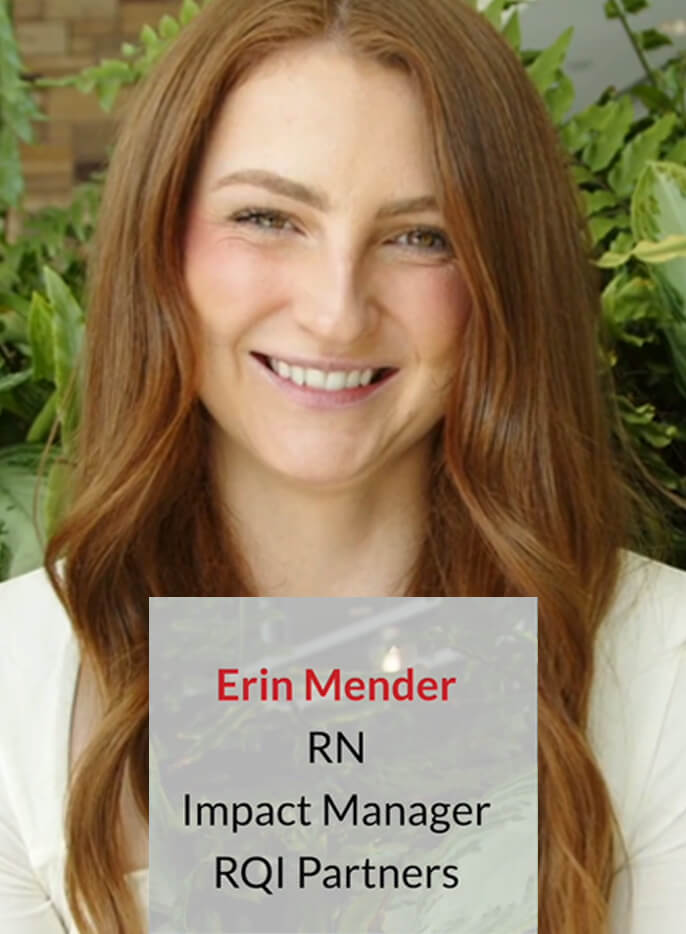
Erin Mender RN, Impact Manager RQI Partners

About Erin Mender, RN

A certified registered nurse, Erin Mender was so moved by her experience providing BLS that she joined RQI Partners in January 2025. Today, she is an impact manager helping to further the organization’s lifesaving mission.

Watch how Erin’s quick thinking — and RQI training — helped save lives.

“The time is ripe for nurses to harness the power of a unique disciplinary perspective and enduring patient trust to advocate for the advancement of policy and continuation of quality research, evidence-based initiatives, and patient centered innovation.”


Recommended Posts

How Nova Scotia Health Transformed CPR Training with the RQI Program


How Nova Scotia Health Transformed CPR Training with the RQI Program
A Canadian Customer Story of Confidence, Consistency, and Culture Change

When an organization as large and complex as Nova Scotia Health – with more than 24,000 employed across the province – decides to rethink how it trains clinical professionals in lifesaving skills, the stakes are high. Yet for years, the health system struggled with a challenge familiar to many healthcare organizations: inconsistent training, long gaps between recertification, and the inevitable skills decay of hands‑on CPR performance.

When an organization as large and complex as Nova Scotia Health – with more than 24,000 employed across the province – decides to rethink how it trains clinical professionals in lifesaving skills, the stakes are high. Yet for years, the health system struggled with a challenge familiar to many healthcare organizations: inconsistent training, long gaps between recertification, and the inevitable skills decay of hands‑on CPR performance.

In a recent customer story shared through video, several leaders and educators from Nova Scotia Health describe how the Resuscitation Quality Improvement® (RQI®) program reshaped their approach to CPR training. Their reflections reveal not just a shift in process, but a transformation in culture that now empowers staff, improves performance, and ultimately strengthens patient care.

Before the RQI Program: A Patchwork of Training and Long Gaps Between Practice

Shelley Orr, a registered nurse with nearly four decades of experience, recalls the reality before the RQI program was introduced. Resuscitation education was largely dependent on external vendors, and there was no standardized process across the organization. Staff were responsible for seeking out courses on their own time, often off‑site and sometimes years apart.

We really had no standardized process within the organization...” Orr said.

“We really had no standardized process within the organization. We had folks going out, taking courses from external vendors… someone recently told me it had been 10 years since they had taken a course,” Orr said.

This wasn’t unusual. Annual or two-year training meant that even the most dedicated clinicians experienced CPR skills decay, which is a natural decline in muscle memory and confidence when skills aren’t practiced regularly. As Clinical Nurse Educator Zoey Miller explains, “You retain that information for a couple of months, and then it goes to the wayside.”

Introducing the RQI Program: Standardized Resuscitation Education

The shift began when Nova Scotia Health implemented the RQI program, a self-directed, low-dose, high-frequency resuscitation education model designed to bring CPR training directly to the clinical environment. Instead of traveling to a classroom or giving up personal time, staff could complete short, focused practice sessions at RQI Simulation Stations located within their own units.

It gives us the ability to have a standardized process… where we’re able to bring the education to the point of care,” Leblanc said.

Derek Leblanc, Manager of Simulation Learning for the Northern Zone, highlights the impact of this new accessibility. With RQI stations available 24/7, staff could “jut out, do five minutes at the skills station, and maintain that competency.” The program’s low dose, high frequency model meant that instead of training once every year or two, clinicians practiced once a quarter or four times a year.

“It gives us the ability to have a standardized process… where we’re able to bring the education to the point of care,” Leblanc said.

The result? Better retention, stronger muscle memory, and a more confident staff.

Real‑Time Feedback: Measurable Skills Improvement

One of the most powerful elements of the RQI program is its real‑time feedback. Instead of waiting for an instructor to evaluate performance, clinicians receive immediate, objective data on compression depth, rate, ventilation adequacy, and more.

Staff now know exactly how they’re performing and can adjust instantly.

“They know what to do in a real code situation because they can reflect on the skills they had from the station,” Miller stated.

The data backs this up. When the program began, infant compression performance was around 46%. After implementing the RQI program, performance increased by an astonishing 121%. This kind of measurable improvement simply wasn’t possible with traditional annual or two-year training.

Overcoming Adoption Challenges and Recognizing a Culture Shift

Implementing a new system across a large health organization is never simple. Leblanc acknowledges that the transition wasn’t without challenges. Some staff were hesitant, especially those who didn’t consider themselves tech‑savvy.

Leblanc acknowledges the early hurdles: “Not going to sugarcoat this. This has been a challenge.”

Some staff were hesitant, especially those less comfortable with technology.

But the platform’s intuitive design helped bridge the gap.

“Even if you weren’t really tech‑savvy, the platform itself is really user‑friendly, so it caught on really quickly,” Leblanc said.

Soon, staff weren’t asking whether they needed to train. They were asking where the Simulation Station was today. This shift reflects something deeper: a culture that embraces continuous learning rather than periodic recertification.

Equity and Consistency Across a Large Organization

Nova Scotia Health employs a workforce of more than 24,000 across the province. Ensuring equitable access to high‑quality resuscitation training for such a large workforce is no small feat. The RQI program didn’t just streamline CPR education. It helped strengthen competence, improved performance, and empowered clinicians across the province.

Clinical Nurse Educator Glenda Howie emphasizes that the RQI program has created a level playing field. Whether a clinician works in a major regional hospital or a smaller facility, they now have access to the same standardized, evidence‑based training.

“They do remember it more so now than they ever have. They’re referring less to the books, and they actually have it in their mind, and they can implement it in practice very fluidly,” Howie said.

That confidence translates directly to patient care. As Howie puts it, “They are ready to perform high‑quality CPR when the population of Nova Scotia needs them most.”

Watch Their Story

Comment Nova Scotia Health a transformé la formation en RCR grâce au programme RQI : une histoire canadienne qui témoigne de la confiance, de la cohérence et du changement culturel

Lorsqu'une organisation aussi grande et complexe que Nova Scotia Health, qui emploie plus de 24 000 personnes dans toute la province, décide de repenser la formation des professionnels de la santé aux techniques de réanimation, les enjeux sont considérables. Pourtant, pendant des années, le système de santé a été confronté à un défi qui est familier à de nombreux organismes de soins de santé : Une formation incohérente, de longs intervalles entre les recertifications et le déclin inévitable des compétences pratiques en matière de RCR.

Dans un récent témoignage client partagé par vidéo, plusieurs dirigeants et formateurs de Nova Scotia Health décrivent comment le programme Resuscitation Quality Improvement® (RQI®) a remodelé leur approche de la formation en RCR. Leurs réflexions révèlent non seulement un changement de processus, mais aussi une transformation culturelle qui responsabilise désormais le personnel, améliore les performances et, en fin de compte, renforce les soins aux patients.

Avant le programme RQI : Une formation disparate et de longs intervalles entre les exercices pratiques

Shelley Orr, infirmière diplômée avec près de quarante ans d'expérience, se souvient de la situation avant la mise en place du programme RQI. La formation en réanimation dépendait en grande partie de prestataires externes et il n'existait aucun processus standardisé au sein de l'établissement. Le personnel était chargé de rechercher des cours pendant leur temps libre, souvent à l'extérieur et parfois à plusieurs années d'intervalle.

«Nous n'avions vraiment aucun processus standardisé au sein de l'organisation. Certains allaient suivre des cours auprès de prestataires externes... quelqu'un m'a récemment dit que cela faisait 10 ans qu'il n'avait pas suivi de cours» explique Mme Orr.

«Nous n'avions vraiment aucun processus standardisé au sein de l'organisation. Certains allaient suivre des cours auprès de prestataires externes... quelqu'un m'a récemment dit que cela faisait 10 ans qu'il n'avait pas suivi de cours» explique Mme Orr.

Ce n'était pas inhabituel. Avec une formation annuelle ou bisannuelle, même les cliniciens les plus dévoués voyaient leurs compétences en RCR se dégrader, ce qui est une baisse naturelle de la mémoire musculaire et de la confiance lorsque les compétences ne sont pas pratiquées régulièrement. Comme l'explique Zoey Miller, infirmière clinicienne formatrice, « vous retenez ces informations pendant quelques mois, puis elles tombent dans l'oubli ».

Présentation du programme RQI : Formation standardisée à la réanimation

Le changement a commencé lorsque Nova Scotia Health a mis en œuvre le programme RQI, un modèle de formation à la réanimation autodirigé, à faible dose et à haute fréquence, conçu pour apporter la formation en RCP directement dans l'environnement clinique. Au lieu de se rendre dans une salle de classe ou de sacrifier leur temps libre, les membres du personnel pouvaient suivre de courtes sessions pratiques ciblées dans les stations de simulation RQI situées au sein de leurs propres unités.

«Cela nous permet d'avoir un processus standardisé... où nous pouvons apporter la formation au point de service» explique M. Leblanc.

Derek Leblanc, responsable de l'apprentissage par simulation pour la zone nord, souligne l'impact de cette nouvelle accessibilité. Grâce aux stations RQI disponibles 24 heures sur 24 et 7 jours sur 7, le personnel pouvait « se pointer, passer cinq minutes à la station de compétences et maintenir cette compétence ». Grâce au modèle à faible dose et à haute fréquence du programme, les cliniciens s'entraînent une fois par trimestre ou quatre fois par an, au lieu d'une fois par an ou tous les deux ans.

«Cela nous permet d'avoir un processus standardisé... où nous pouvons apporter la formation au point de service» explique M. Leblanc.

Le résultat ? Une meilleure rétention, une mémoire musculaire plus forte et un personnel plus confiant.

Rétroaction en temps réel : Amélioration quantifiable des compétences

L'un des éléments les plus puissants du programme RQI est sa rétroaction en temps réel. Au lieu d'attendre qu'un instructeur évalue leurs performances, les cliniciens reçoivent immédiatement des données objectives sur la profondeur et la fréquence des compressions, l'adéquation de la ventilation, etc.

Le personnel sait désormais exactement comment il se comporte et peut s'adapter instantanément.

« Ils savent quoi faire dans une situation d'urgence réelle, car ils peuvent réfléchir aux compétences acquises lors de la formation », explique M. Miller.

Les données le confirment. Au début du programme, les performances en matière de compression chez les nourrissons étaient d'environ 46 %. Après la mise en œuvre du programme RQI, les performances ont augmenté de 121 %, ce qui est tout simplement incroyable. Ce type d'amélioration mesurable n'était tout simplement pas possible avec les formations traditionnelles annuelles ou bisannuelles.

Surmonter les défis liés à l'adoption et reconnaître un changement de culture

La mise en œuvre d'un nouveau système dans une grande organisation de santé n'est jamais simple. M. Leblanc reconnaît que la transition n'a pas été sans difficultés. Certains membres du personnel étaient réticents, en particulier ceux qui ne se considéraient pas comme des experts en technologie.

M. Leblanc reconnaît les obstacles initiaux : « Je ne vais pas vous mentir. Cela a été un défi. »

Certains membres du personnel étaient réticents, en particulier ceux qui étaient moins à l'aise avec la technologie.

Mais la conception intuitive de la plateforme a contribué à combler le fossé.

« Même si vous n'étiez pas vraiment à l'aise avec la technologie, la plateforme elle-même est très conviviale, elle a donc été très vite adoptée », explique M. Leblanc.

Très vite, les membres du personnel ne se sont plus demandé s'ils avaient besoin d'une formation. Ils se demandaient où se trouvait la station de simulation aujourd'hui. Ce changement reflète quelque chose de plus profond : Une culture qui privilégie l'apprentissage continu plutôt que la recertification périodique.

Équité et cohérence au sein d'une grande organisation

Nova Scotia Health emploie plus de 24 000 personnes dans toute la province. Garantir un accès équitable à une formation de haute qualité en réanimation pour un effectif aussi important n'est pas une mince affaire. Le programme RQI n'a pas seulement rationalisé la formation en RCR. Il a contribué à renforcer les compétences, à améliorer les performances et à autonomiser les cliniciens dans toute la province.

Glenda Howie, infirmière clinicienne enseignante, souligne que le programme RQI a créé des conditions équitables. Qu'ils travaillent dans un grand hôpital régional ou dans un établissement plus petit, les cliniciens ont désormais accès à la même formation standardisée et fondée sur des données probantes.

« Ils s'en souviennent mieux que jamais. Ils consultent moins les manuels, ils ont tout en tête et peuvent mettre leurs connaissances en pratique de manière très fluide », explique Mme Howie.

Cette confiance se traduit directement dans les soins prodigués aux patients. Comme le dit Mme Howie, « ils sont prêts à pratiquer une RCP de haute qualité lorsque la population de la Nouvelle-Écosse en a le plus besoin ».
Découvrez leur histoire

Erin Mender RN, Impact Manager RQI Partners

About Erin Mender, RN

A certified registered nurse, Erin Mender was so moved by her experience providing BLS that she joined RQI Partners in January 2025. Today, she is an impact manager helping to further the organization’s lifesaving mission.

Watch how Erin’s quick thinking — and RQI training — helped save lives.

“The time is ripe for nurses to harness the power of a unique disciplinary perspective and enduring patient trust to advocate for the advancement of policy and continuation of quality research, evidence-based initiatives, and patient centered innovation.”

digital technology in healthcare