




NRP® Cardiac: Preparing Clinicians to Manage CCHD at Birth
NRP® Cardiac: Preparing Clinicians to Manage CCHD at Birth
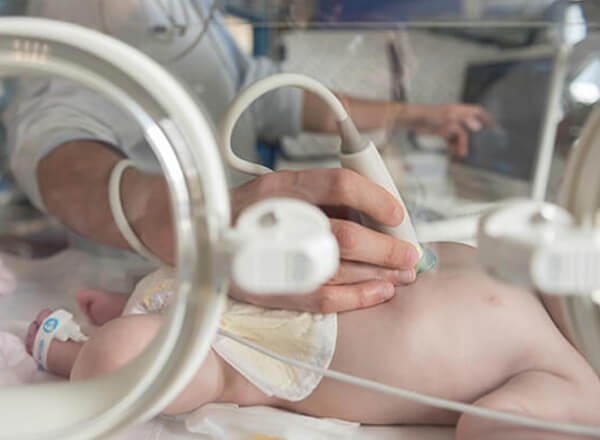
Congenital heart defects (CHDs) affect nearly 40,000 infants in the U.S. annually. Many of these defects aren’t detected until after birth, raising the stakes for effective delivery room management.
That’s why the American Academy of Pediatrics (AAP) developed the NRP® Cardiac course for the Neonatal Resuscitation Program®. NRP® Cardiac equips experienced clinicians with the skills necessary to care for newborns with critical congenital heart diseases (CCHDs).
How NRP Cardiac Training Helps Improve Newborn Outcomes
NRP Cardiac guides experienced providers in recognizing when standard care pathways apply and when to use a modified approach. The curriculum combines broad foundational knowledge with the latest research in cardiac anomalies. It applies specialized delivery room care principles to support optimal outcomes for newborns with CHD.
Course participants will walk away knowing how to:
- Apply a structured framework: Use the “HAS ROP MEAP” method to assess and guide care for infants with CHD.
- Identify the right pathway: Distinguish which CHD diagnoses require standard, modified or urgent intervention.
- Integrate prenatal insights: Understand how prenatal diagnosis and transitional physiology shape delivery room decisions.
- Learn from leading experts: Gain practical guidance from top clinicians experienced in neonatal cardiac management.
- Prepare for any delivery: Anticipate and manage both expected and unexpected CHD scenarios with confidence.
- Tailor resuscitation techniques: Adapt standard NRP® protocols to support oxygenation, perfusion and circulation in cardiac cases.
What Neonatal Resuscitation and CCHD Topics Does NRP Cardiac Cover?
Improving outcomes for newborns with CCHDs requires a team approach spanning fetal assessment through post-resuscitation care. NRP Cardiac supports advanced providers in refining their knowledge and maintaining clinical readiness.
The course delivers eight modules focusing on specific CCHDs, fetal to neonatal transition and the approach to undiagnosed CCHD. The modules include:
- Congenital Complete Heart Block (CHB)
- Ebstein’s Anomaly
- Fetal-to-Neonatal Transition in Congenital Heart Diseases
- Hypoplastic Left Heart Syndrome (HLHS)
- Tachydysrhythmia Including Supraventricular Tachycardia (SVT)
- Tetralogy of Fallot
- Transposition of the Great Arteries (d-TGA)
- Undiagnosed Congenital Heart Diseases in the Delivery Room
Self-Paced eLearning Supports Advanced Providers
Building on the foundation of the Neonatal Resuscitation Program algorithm, NRP Cardiac is a self-paced eLearning course. It leverages True Adaptive Learning technology, which is also used in the RQI® for NRP® curriculum, personalizes content based on each learner’s skills and knowledge.
Developed by Leading Neonatal and Cardiac Care Experts
The AAP and NRP collaborated with the Fetal Heart Society and the American Heart Association (AHA) to develop the course. The curriculum builds on the work of the Learn CHD Collaborative.
This expert group of neonatal researchers, educators and clinicians comes from 10 hospitals across North America. Each contributed advanced knowledge and experience in transitional and cardiac physiology, as well as simulation and human factors.
To enroll in NRP Cardiac, participants must have an active NRP Advanced Provider status.
Learn More in the Introducing NRP® Cardiac Webinar
The Introducing NRP® Cardiac webinar is a succinct way to learn about the course. You’ll hear directly from three neonatal cardiac specialists who contributed to the NRP Cardiac curriculum:
- Noorjahan (Nora) Ali, MD, MSc, FAAP, associate professor in the Department of Pediatrics, UT Southwestern Medical Center
- Mary Donofrio, MD, FACC, FASE, professor of pediatrics at George Washington University School of Medicine and pediatric and fetal cardiologist at Children’s National Hospital in Washington, D.C.
- Chloe Joynt, MD, MSc, FAAP, FRCPC, associate professor in the Department of Pediatrics at the University of Alberta and neonatologist at the David Schiff Neonatal Intensive Care Unit at the Stollery Children’s Hospital
Presented by Leading Experts



Recommended Posts